
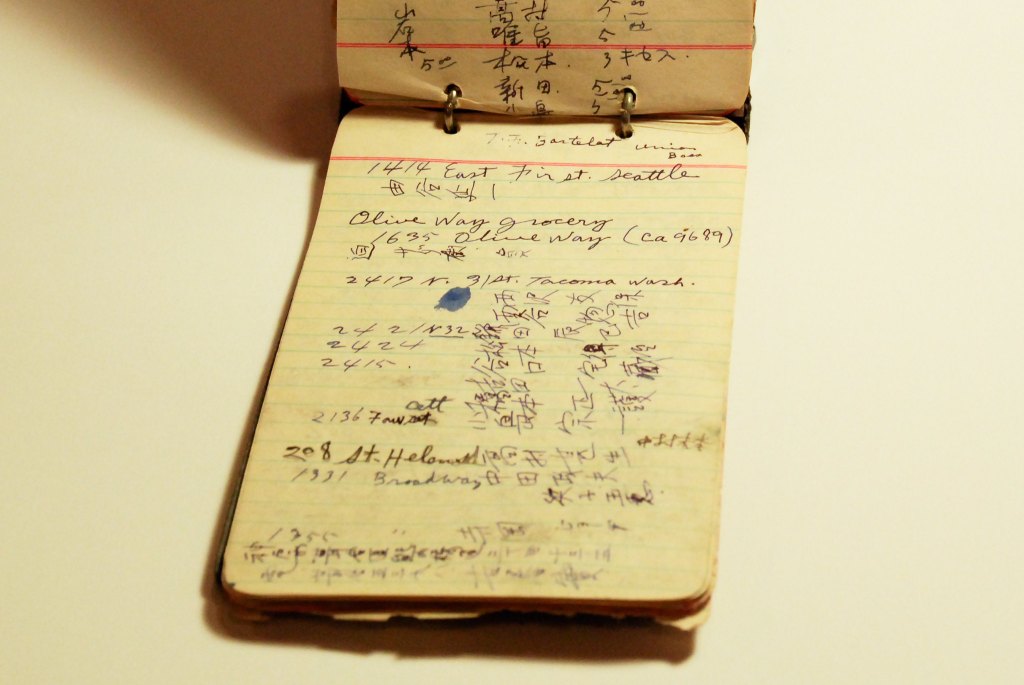
For the last decade or so, I’ve carried around a little notebook that I refer to as my “think book.” It’s a place to put notes and ideas and observations and connections that I may want to come back to later. This week, I transitioned from volume 9 of the book to volume 10. Whenever I do that, I read through the old book one last time to see if there are any loose threads I want to pick up on in the new book. These are some of the bits that made me smile. They’re not really worth their own blog posts, but they’re interesting enough to share in a list:
I still love the idea of recipes being algorithms. How do you make salsa? You combine chiles, aromatics, acidic fruit, and salt. Then, adjust the ratios until it tastes right.
I’m Right, You’re Wrong: I’ve been listening to Hidden Brain for years. This episode, from back in 2017, keeps coming back to me. When we want to influence people regarding change, there are two primary strategies: FEAR makes people stop innovating, adapting, and growing. HOPE makes people do the opposite. If you want to encourage people to embrace change, you have to do it through hope. I often use this lens when looking at what leaders are saying. The ones peddling hope are the ones looking to the future.
“The ocean does not apologize for its depth, and the mountains do not seek forgiveness for the space they take, and so, neither shall I.” — Becca Lee
There are so many things about Artificial Intelligence. I’ve written about it several times. I’ve seen demos and attended conferences and watched videos and discussed it in many meetings. Mostly, those conversations were about hope rather than fear, which is really encouraging. AI is really good at making new things that look like old things. But it’s also just a parlor trick underneath. It’s Baysean word salad, the great-grandchild of Eliza. That doesn’t mean it’s not useful. But we have to understand that it’s just reflecting ourselves back to us. As we move forward, we have to stop spending so much energy focusing on using AI to do routine things faster and instead concentrate on doing new things. The killer app to AI is answering the questions that haven’t occurred to us yet.
“I’m too old to be governed by the fear of dumb people.” — Sam Waterston, The Newsroom
The Internet is disturbingly ephemeral. When you put something out on the Internet, it’s out there forever. That’s part of the bargain, and we all (hopefully) understand that. We’re trading control of the thing in exchange for making it available to a wide audience. But at the same time, the Internet is changing all the time. Web sites move or get reorganized. Links break. It’s like writing down ideas on notecards and throwing them in a big pile. They’re all there, forever, but nobody can find them. For a time, I had Twitter and Facebook tied together, so when I tweeted something, it also make a Facebook post. Those are now showing up in Facebook memories, which is kind of fun. But nearly all of the links that I tweeted over the years are broken now. Maybe that’s just as well. But somehow, that allegedly pants-free photo keeps resurfacing.
“Men are not to be reasoned out of an opinion that they have not reasoned themselves into.” — Fisher Adams, 1786
I’ve stopped using social network tools to curate a personal learning network. That’s a huge change for me. But I have lost my tribe, and the open doors that I stumble through online seem to all have lots of people shouting, and nobody listening. We’ve gone from an environment of open, engaging, fluid conversations to a lot of walled gardens and closed doors. That’s sad, because my PLN was the single most influential factor in my professional growth over my career. But I don’t know how to fix it.
Dave’s book is really important. It’s a good read. It’s not super long. The ideas are a bit dense. I’ve read it multiple times. We’re living in a different world from the one we grew up in because information is everywhere now. Our schools, our skills, our society, and our priorities all need to change. And they are changing, but it’s helpful to understand how and why they’re changing. We also did a book study, which was really fun (though not very groundbreaking).
“Collaboration is when you walk into a meeting with one idea, and walk out with a better one.” — Peter DeWitt
Late last year, I was gifted a book on educational technology published in 1987. That’s fascinating because it pre-dates widespread use of the Internet. In an era when the web didn’t exist and schools had (at most) a few computers, what did the researchers have to say about the impact of these new machines? In The Meaning of Educational Technology, an essay in the book, Victor N. Kobayashi notes, “in our ardor to convert children into literate beings, we must at the same time attempt to preserve those aspects of their pristine preliteracy that are so important to our mental and spiritual health.” Don’t be in such a big hurry. And maybe put that iPad down for a while.
“We have a RESPONSIBILITY to check the veracity of stories that we share, retweet, and amplify.” — Martin Weller, Metaphors.
Fixable might be my new favorite podcast. In half-hour episodes, Harvard Business professor Frances Frei and best selling author and CEO Anne Morriss help us navigate the working world with common sense strategies to improve workplace dynamics, build trust, and achieve goals. They’re extremely practical, and their advice applies to organizations of all types and sizes. We’ve used many of their ideas with our administrators, and a diagram of their trust triangle is on the wall in my office.
So this book goes on the shelf next to its eight predecessors, and it’s time to start writing the next chapter.
 Taste of Tech