I don’t know where I learned about the purpose of government.
I don’t think it was in high school. While my American History class did a deep dive into information literacy through the lens of primary sources, the motivations of those creating the sources, and the necessity of identifying and accounting for bias, we didn’t get into the big picture of why there’s a government in the first place. When I got to college, I skipped all of the history and government classes, so I don’t think it came up there. But at some point, I was instilled with a reverence for the founding documents. And while they certainly have their flaws, they do establish a roadmap for what America wanted to be a quarter of a millennium ago.

[A]ll men are created equal, that they are endowed by their Creator with certain unalienable Rights, that among these are Life, Liberty and the pursuit of Happiness.–That to secure these rights, Governments are instituted among Men, deriving their just powers from the consent of the governed…
I’ll point out that, even into the early 21st century, masculine pronouns were used to refer to both men and women when the gender wasn’t certain. We were taught that we could subsitute “people” in that sentence to get a more accurate picture of what they meant. Of course, if that were actually the case, they probably would have given women the right to vote. Or black people. Or 18-year-olds. The point, though, is that we have rights. And our government should protect them. The constitution goes into a bit more detail about the purpose of government (you can sing along if you want):
[F]orm a more perfect Union,
establish Justice,
insure domestic Tranquility,
provide for the common defence,
promote the general Welfare,
and secure the Blessings of Liberty to ourselves and our Posterity…
They’re lofty words. They’re aspirational words. They describe a work in progress, admitting that our union is not already perfect. We want liberty and justice for all. We want domestic tranquility, where we’re not constantly fighting with one another. We want the goverment to protect us from threats, both outside and within our country. We want the government to HELP us. It should be doing the things that we can’t do individually. That might be creating and maintaining infrastructure like reliable transportation and utility systems. Maybe it’s helping to care for the elderly or the sick in a compassionate way. Maybe it’s helping to create opportunities for the disadvantaged. It might be establishing programs and poilcies to protect our natural resources and the environment in situations where it’s more convenient (and more profitable) to exploit them. It’s a collective responsibility, but part of the government’s mission is to promote the general welfare by raising the bar for all of us. And finally, government should secure the blessings of liberty. Stop telling me what to do. If I’m not hurting anyone else, leave me alone. Don’t push your religion on me. Don’t insert yourself into my medical decisions. If I want to shave my head or get a tattoo or wear a head scarf or a cowboy hat or plaid pants, that’s my business. Not only do you not get to judge me, you also have the obligation to protect my right to those things without persecution. Our government should be protecting us. All of us.
What do you want from your government?
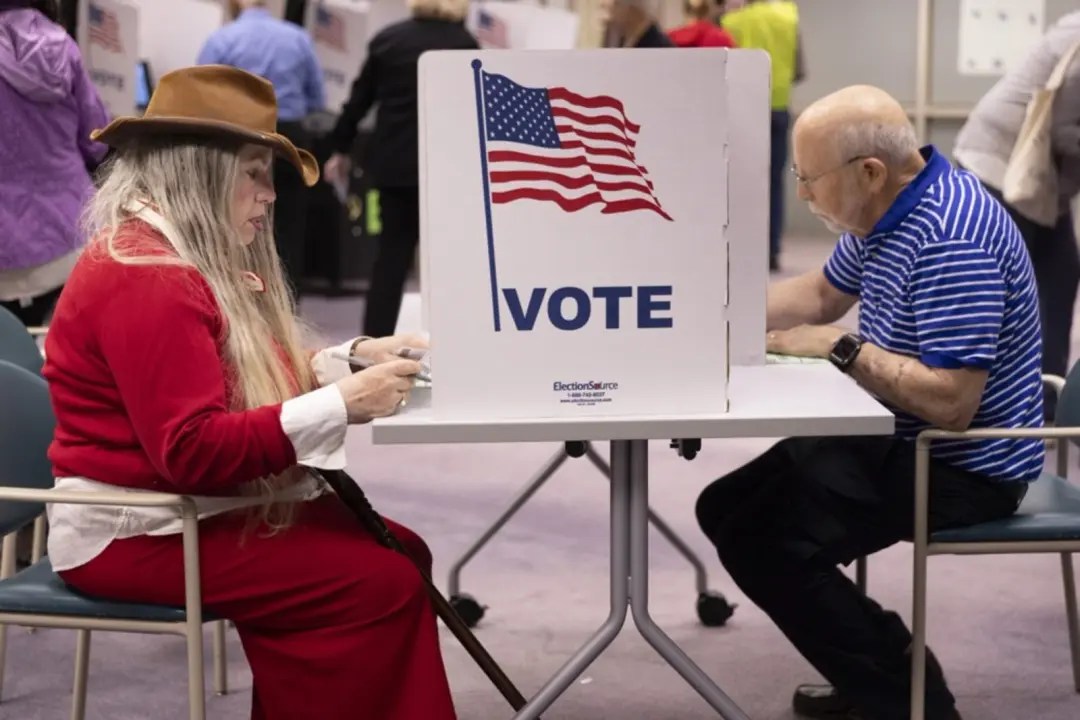
If you are an American and you haven’t done so already, you’re likely to find yourself looking at a ballot over the next couple weeks. You’re going to make choices about what you want from your government. The power of the government, according to the Declaration of Independence, dervices from the consent of the governed. We make the decisions about who we give power to. And those decisions are up to you.
Look at the candidates. Look at what they say, and what they do. What do they fight for, and what do they fight against? What is important to them? You don’t have to make the choices that you think your family or friends or coworkers expect from you. You don’t have to do the popular thing or the politically correct thing. Just decide what you want from your government, and make your voice heard.
I don’t know what this has to do with education or technology, really. Except that we want our children to think for themselves. We want them to be critical thinkers. We want them to be problem solvers. We want them to be creative and collaborative and resilient and adaptable. We want them to be engaged, and open-minded, and seekers of truth. We’ve been talking about all of these things for my entire career. And hopefully, some of it has connected with them. Our media is so filled with disinformation. We’ve moved away from an environment where truth and integrity are valued. Our information resources are so polarized that it’s nearly impossible to find balanced analysis. And while we’re working really hard on those information literacy skills, the information pollution is destroying the knowlege environment faster than plastics are destroying the oceans.
I don’t know what the next few weeks will bring. In some ways, it’s a test of whether this emphasis on NextGen skills has actually worked. But it’s a time of hope and engagement and participation. And we’re going to find out how much America aligns with its own ideals.
 Taste of Tech
One thought on “Self-Evident”
Comments are closed.