Over break, I read “Deliver Me From Nowhere,” an account of Bruce Springsteen’s recording of the Nebraska album. Sandwiched between the successful River tour and the record-breaking Born in the USA album, Nebraska is quiet, simple, contemplative, and depressing. Springsteen wrote the songs and recorded demos of them on his TEAC 144 Portastudio, a “home studio” machine that could make multitrack recordings on cassette tape.
Once they got to the studio to formally record the new songs, Springsteen had trouble getting the feeling of the demos reflected in the professional studio recordings. At one point, he suggested starting with the demo tapes, and letting the band add additional tracks in the studio.
But they couldn’t do that. The Portastudio used a proprietary format that was different from anything in the professional studio. It hadn’t occurred to anyone at TEAC that people might actually want to use the recordings they made on this little home recording device in a professional studio. They didn’t have a way of editing or adding to those recordings because they could only be used on the Portastudio hardware. And while they could transfer the individual tracks to professional hardware, they couldn’t do so in a way that would keep the tracks in sync. In the end, those demo recordings were released as is, and make up the Nebraska album we know today. The whole thing was recorded on home equipment in his Colts Neck, NJ bedroom.
We’ve seen this before. Technologies are often developed without interoperability in mind. If you remember anything about the Apollo 13 movie, it’s the scene where the techs on the ground are challenged to make the square CO2 filter cartridge fit into the round hole in the lunar module. While this is a great illustration of problem solving and innovating thinking under extreme contraints, the premise is a bit rediculous. There were two devices on the spacecraft responsible for doing exactly the same thing, and they were completely incompatible with one another. In this case, they were designed by different teams, and those teams didn’t work together.
Remember when you had that group project to do in school and you divided it up among the people in the group? “Okay, we’re studying the cheetah. I’ll focus on habitat. You work on diet. He’s going to be responsible for characteristics. She’s going to come up with some fun facts.” Everyone did their own PowerPoint slide. You worked cooperatively, perhaps,but not collaboratively. Don’t ask me anything about diet. I only know about habitat. And if the kid who came up with the fun facts is absent on presentation day, we’re not going to have any fun facts.
These kinds of incompatibilities are sad and annoying, but they’re not malicious. The engineers at TEAC just had a lack of imagination. They didn’t forsee how people were going to use their machine. The engineers at NASA were trying to complete an impossible task on an even more impossible timeline. Divide and conquer was the only strategy that would have worked for them, and they sacrificed collaboration to get there.
But we’re in a different world now. We’re in a world where things are incompatible on purpose.
Are your friends frustrated that you’re a “green bubble” in chat instead of a blue bubble? Or, maybe, you ARE the friend that’s frustrated because everyone isn’t a blue bubble. Green bubbles are annoying. They screw up the group chats. They don’t have all of the features. If they’d just get a real phone, they could move into 21st century communication like the rest of us.
But the reality is that the green bubble problem exists because Apple doesn’t follow communications standards. Rather than using the mobile messaging standards that the whole industry adopted, Apple created their own proprietary format for sending messages between iPhones. These messages use the data network rather than simple text messages, and even with the widespread adoption of next generation standards (like RCS) for messaging, Apple has been reluctant to implent them. In short, they WANT communication between Apple and Android devices to be inferior to communication among Apple devices. Maybe if my friends complain enough, I’ll ditch my Android phone in favor of an iPhone, so I can be a blue bubble. So they break it on purpose.
Late last year, we received notice that our Wemo smart devices will stop working at the end of January. Wemo made some pretty cool smart switches and smart outlets, so we could do things like turning on and off lights and other things around the house using an app or script. We use voice controls in addition to schedules to automate a lot of this. But Wemo used a propietary communication technology. It required the use of their app, and the devices had to check in with their servers. In addition to being a privacy problem, this meant that when the company could no longer sustain the infrastructure to keep everything working, all of the devices stopped functioning.
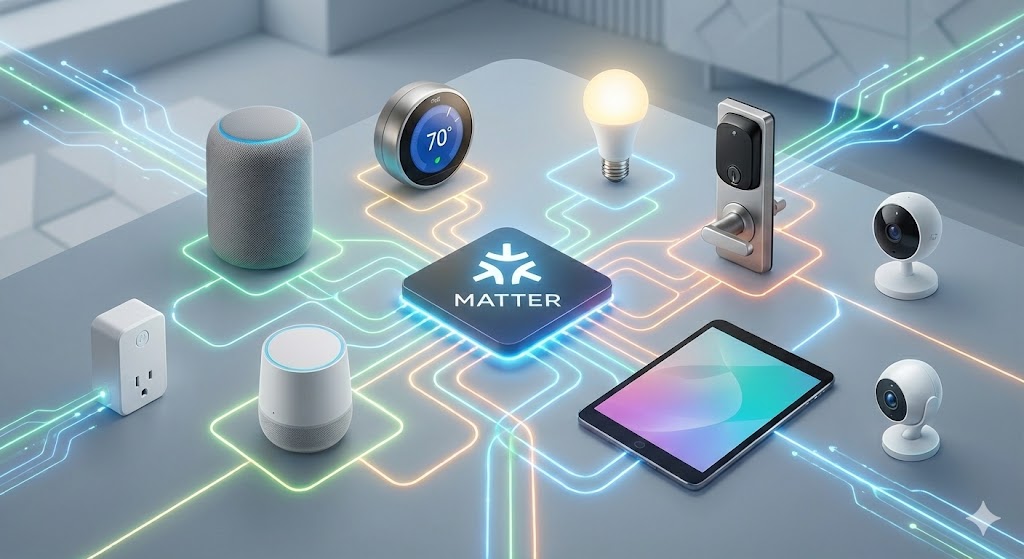
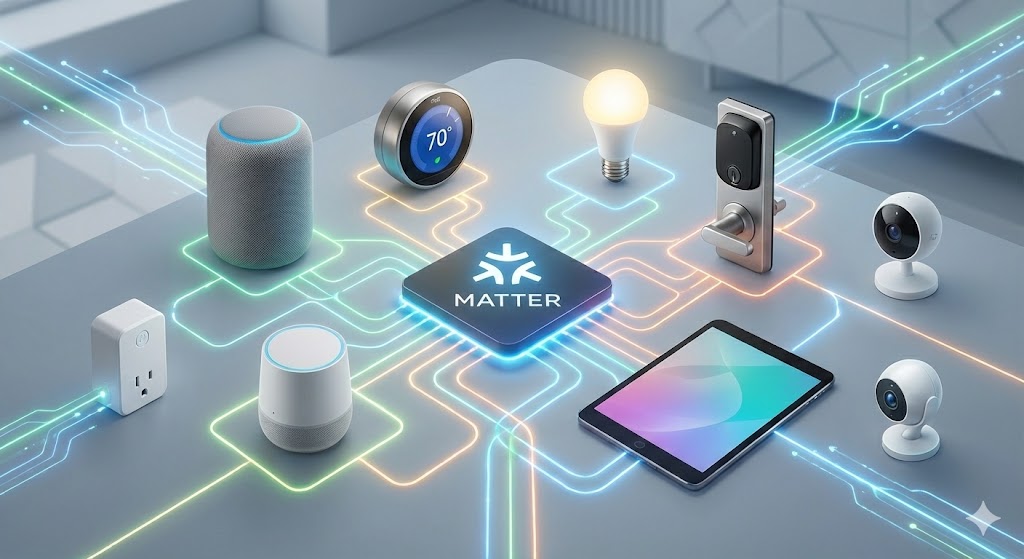
Recognizing that this problem exists across the home automation spectrum, the Connectivity Standards Alliance formed in 2022 to help standardize communication between these types of devices. Their Matter standard, developed from the earlier Zigbee standard, ensures that certified devices will continue to work, even with devices from other manufacturers, and even after the company stops making them. As a consumer, you just have to know to look for the Matter certfication on your smart devices. All of the new ones being added to my house as we replace the Wemos are Matter certified.
In the education world, I’ve waded through countless projects where data interoperability has been a challenge. Most companies will import (or try to import) data from their competitors’ products. But getting them to export their data so others can use it easily is much harder. “Let’s say we get to year three, and I want to switch to a different product. How do I get my data out in a useable format.” “Why would you want to do that? This is the best product that’s ever been made. You’re never going to want to switch to something else.”
Technology is disposible. Even the newest, latest, most fantastic things are only going to be around for a few years. Companies die when they stop making money. Products get replaced. Workflows get updated. Things change. We need products that recognize that they’re just one part of a much larger ecosystem, and they’re often a temporary piece of the big puzzle. When selecting new products, new platforms, new technologies, we constantly need to ask how well it plays with others. Does it adhere to the relevant standards? Does it exchange data in useful ways? Can it be a collaborative part of your data solution?
Or does it just make PowerPoint slides with fun facts?
 Taste of Tech