We’re tired of technology.
The promise was great. Technology was going to give us instant access to all of the world’s information. We could communicate with anyone, anywhere. And we’d have this access everywhere we go, instantly. It would change how we work and learn and think and live. And it did.
Schools today are different from the ones I attended as a student. And they’re different from the ones I worked in as a teacher 25 years ago. Our students’ needs are different. Our teachers’ methods are different. Our parents’ concerns are different. Our politicians’ priorities are different.
Technology certainly played a role in that. Ubiquitous connectivity and access to information changed what our students need. They don’t need to remember as much stuff. They do need to be better critical consumers of information. They need to be able to summarize information quickly and accurately. They need to synthesize multiple points of view, considering frames of reference and bias. They need to draw conclusions and make decisions and leverage their access to information to solve complex problems. Our teachers need to be better at using formative assessment to customize learning experiences to meet the individual needs of each student. They have to be engaging and relevant. They have to find ways to encourage critical thinking and innovation and strategic problem solving and authentic collaboration while still making sure that students have the knowledge and skills that are expected of them. School is a lot more complex now, because our world is a lot more complex now. It’s not possible to give students a robust, public education that meets their needs without using technology.
But technology has a dark side. The costs are significant. The content that’s available online isn’t always appropriate for young learners. It’s difficult to navigate hate and intolerance and disinformation when you’re just learning to be an intelligent consumer of information. Cybersecurity threats are real and serious. Data privacy practices have historically been wildly insufficient. Popular apps and platforms use engagement tactics to encourage behavioral addiction. And the perceived anonymity and privacy of online spaces encourages bullying and harassment.
Last year, schools banned cell phones. In the US, 22 states passed laws mandating full bans or limits on cell phones in K-12 classrooms. Another 21 states have varying flexible guidelines or requirements for schools to create their own policies. These policies were enacted to combat classroom distraction, reduce behavioral issues like cyberbullying, and improve youth mental health. Teachers and school leaders have celebrated the effects of these bans, noting significant drops in classroom disruption and online bullying at school as well as increased student interaction in cafeterias and on playgrounds. After an initial grieving period, students ultimately accepted the new normal of phone-free schools, and some have even praised the bans for redirecting their focus to schoolwork.
What the cell phone bans have NOT done, though, is improve student mental health. This Pew/USC research study found that only 28% of students reported a positive shift in their wellbeing following a cell phone ban, while another 26-28% reported that their wellbeing was noticeably worse. Stanford found that disciplinary cases actually INCREASE following a phone ban, with students who suffer from high anxiety and device dependency hyper-fixated on bypassing the restrictions and getting in trouble for it. Researchers have also noted that after-school online bullying explodes following phone bans as the emotional fallout of social media exclusion, rumors, and chatroom bullying gets heavily backloaded into the late afternoon and evening.
Now, lawmakers and some parent groups are pushing for schools to limit all classroom screen time. These efforts expand the concern with student online activities to school issued-devices. Frustration is growing as students use their school Chromebooks or iPads to watch videos, play games, message friends, and engage in other non-academic behavior. While they’d much rather use their phones for these activities, the phone bans have forced them to turn to their school devices. The Los Angeles Unified School District has completely banned screen use for students before second grade, set limits for middle school students to six hours per week, and capped high school students at 10 hours per week. Six states have enacted screen time limits for students, and ten more are considering legislation to force screen time restrictions at school.
These limits will help further address the very real concerns of student distraction and compulsive technology use. They’ll do that at the expense of using technology in meaningful ways to foster student learning. Schools can’t reasonably meet students’ needs in this century by going back to the resources and methods that we used in the last century. There will be something lost in the move away from technology in schools. And the irony is that these measures aren’t going to solve the mental health challenges, either. It’s easy to say that students are struggling a lot more now than they were a generation ago. But let’s look at some statistics. In the 30 years that I’ve been working in education:
- Teen alcohol use has declined from 47% to 30%
- Teen birth rate has dropped by over 75%
- Fights among high school students have declined from 42% to 18%.
- Youth incarceration rates have fallen by 74%
- College graduation rates have doubled while the cost of those degrees has more than quadrupled.
At the same time:
- Adult suicide rates increased by 35%.
- Overdose deaths among adults rose by 160% to more than 100,000 per year.
- The percent of school lunches that were free or reduced rose from 56% to 74%.
- The annual number of gun incidents at K-12 schools has increased by 760%.
The actual cause of teen mental health issues might not be limited to the rise in social media use. Perhaps cell phones and iPads aren’t the only changes that our society has seen in the last generation. Maybe there’s more going on here. Adult mental health, socio-economic tension, drug use among adults and caregivers, and school safety trauma might have something to do with teen mental health, especially since these factors are all out of students’ control.
In a June, 2026 TED Talk, developmental psychologist Candice Odgers highlighted a massive gap between public perception and actual science when it comes to adolescent mental health. She argues that there’s no meaningful statistical link between screen time and mental health symptoms. She points out that a measure of screen time is useless without an analysis of how that time is being used. And she explains that we often confuse symptoms and causes. When teens are already experiencing severe depression, trauma, or family instability, they tend to retreat to online spaces to seek support, escape toxic environments, or cope with isolation. Removing access to these spaces could be making the problem worse instead of better.
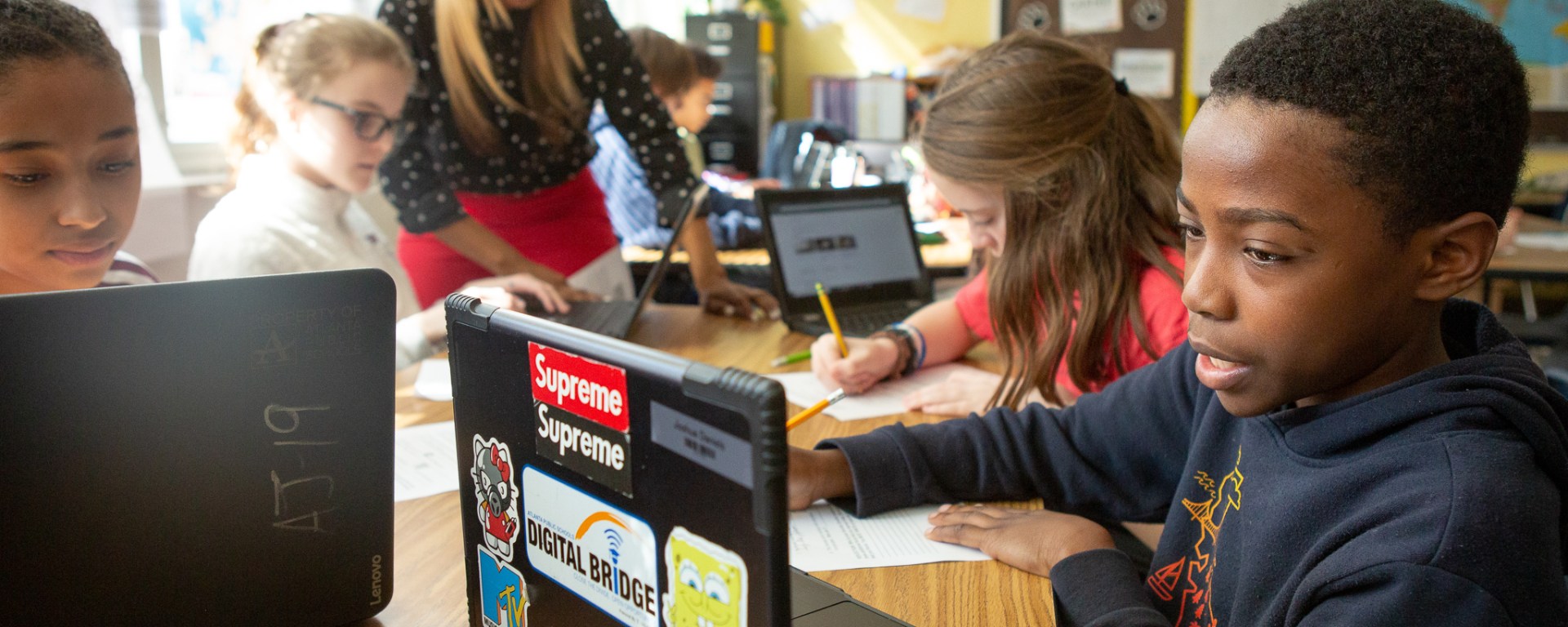
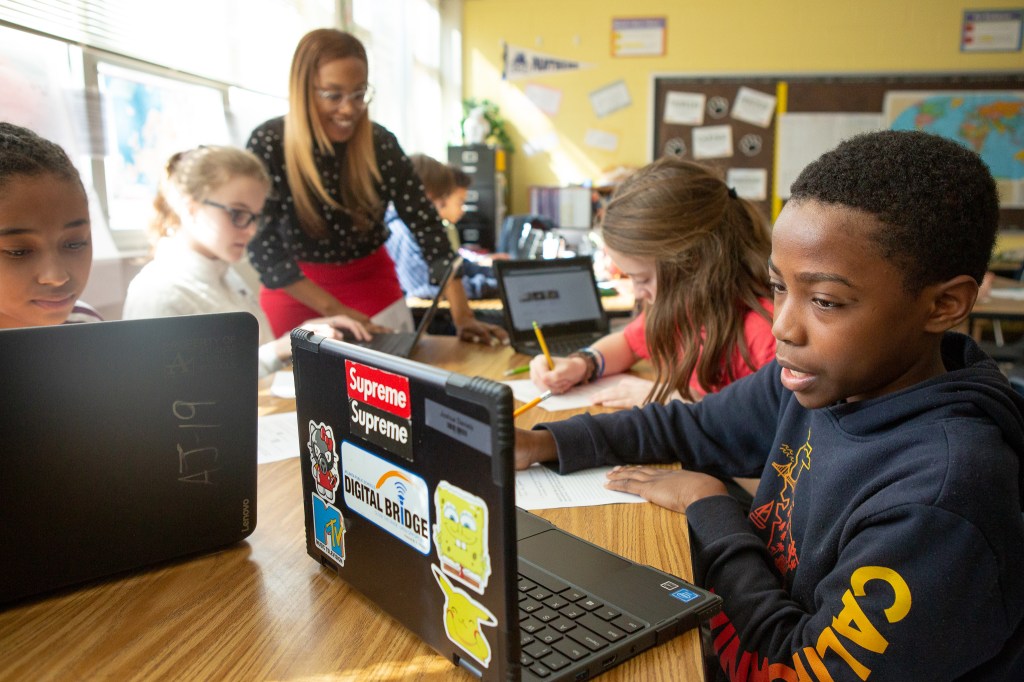
So where does this leave schools? We are in the same place we’ve always been. We are intentional about technology use. When devices help engage students, customize their learning experiences to meet their individual needs, give them ways to collaborate and communicate on their academic work, and demonstrate their learning in interesting ways, we use it. When it doesn’t help us do those things, we set it aside. In reality, that means technology use in our schools is minimal at the primary level, increases at the intermediate level, and then stabilizes through middle school and high school. We’re not afraid of it. We don’t ban it. We don’t delude ourselves into thinking it’s going to solve all of our problems.
But at the same time, we also don’t pretend that technology has caused all of our problems, or that banning it will actually solve them.

